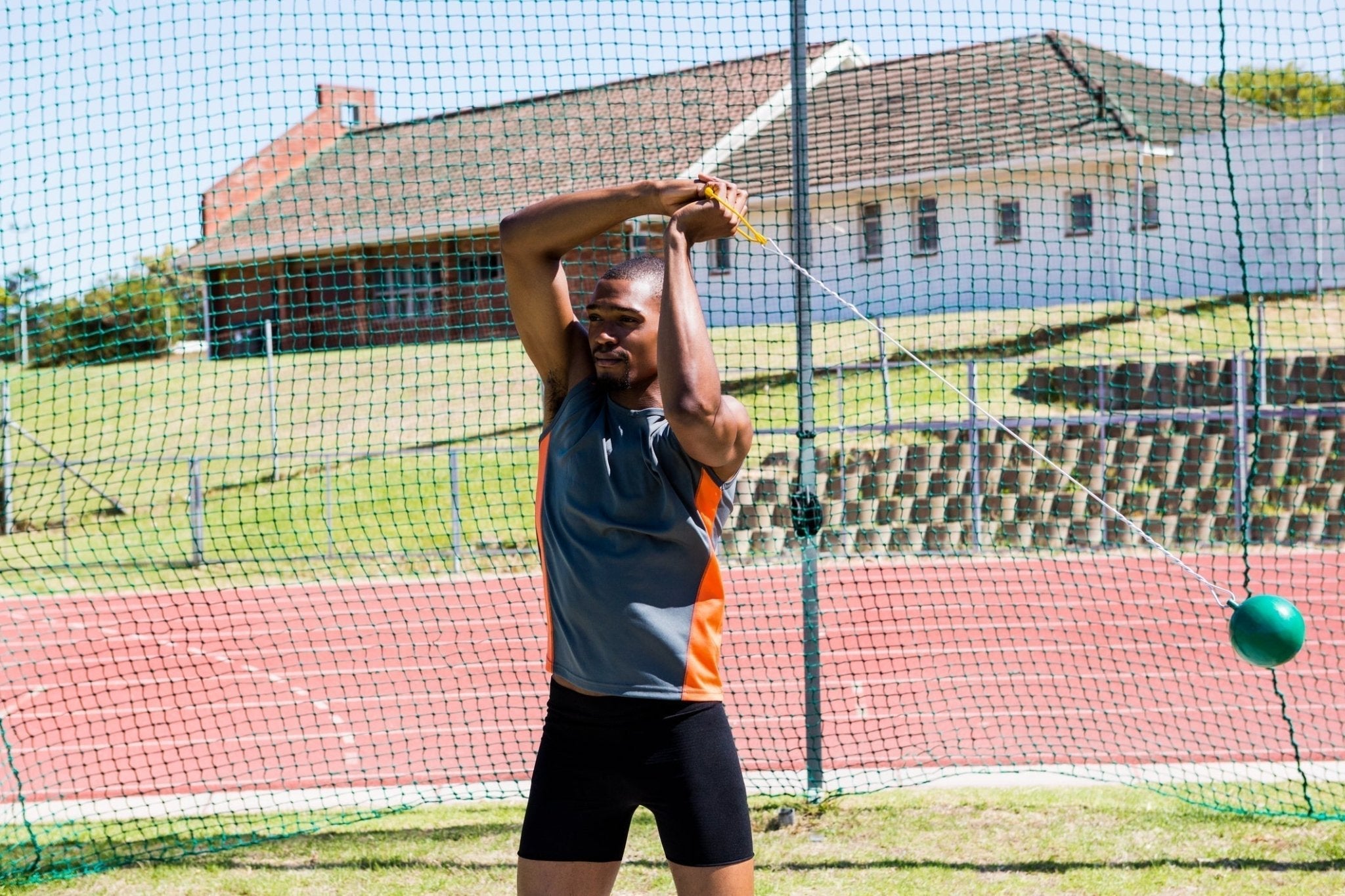

Track and field simplifies human movement into its purest forms: sprinting, jumping, and throwing. Specifically, running events in track and field offer a diverse range of disciplines from the 60m indoor dash to the 25-lap 10,000m grind, requiring athletes to master distinct energy systems like the ATP-CP or oxidative pathways to achieve elite performance.
TL;DR
Running events in track and field categorise athletes by distance, obstacle presence, and relay coordination across standard 400m outdoor ovals. Sprints like the 100m rely on explosive fast-twitch muscle fibres, while middle-distance races like the 1500m balance aerobic capacity with tactical kicks. Strategic nuances include the "one-and-done" false start rule and the use of carbon-plated "super spikes" to smash world records.

Quick Tips
1Always check your spike pin length to ensure it matches the track surface.
# In This Article
5 sectionsQuick navigation to each section of this article:
What Are the Different Types of Track Races?
Running events are primarily divided into sprints, middle-distance, and long-distance categories based on the metabolic demands placed on the athlete. Sprints are anaerobic explosions, middle-distance races are tactical battles of attrition, and long-distance events are tests of pure aerobic efficiency.
In the world of types of track races, the physiological divide is stark. A 100m sprinter operates almost entirely on stored energy, while a 10,000m runner relies on oxygen delivery. The 400m remains the most "painful" event, as it sits at the absolute limit of the lactic acid system.
Each track event requires a specific muscle fibre composition. Sprinters lean heavily into Type II fast-twitch fibres for force, whereas distance runners develop Type I slow-twitch fibres for endurance.
Sources: World Athletics Event Categories

What Is the Strategy for Different Track Races?
Strategy varies wildly because a track racing plan for a 100m dash is over in ten seconds, while a 5000m race allows for minutes of psychological warfare. Sprinters must focus on the "Science of the Start," while distance runners focus on "the kick."
In many different track races, lane assignments dictate the plan. In the 200m and 400m, runners in the outer lanes cannot see their competitors, requiring them to "run their own race" against the stagger. In the 800m, the strategy shifts after the first 100m when athletes "break" from their lanes to find the shortest path on the inside rail.
The "Mind's Finish Line" is where races are won. In the 1500m, runners often perform a "sit and kick" tactic, where they stay behind the leader to draft, only sprinting in the final 200m to steal the victory.
Sources: The Science of Running Dynamics

How Do Equipment and Rules Impact a Track Event?
Modern running events in track and field are governed by strict technical rules and influenced by rapid advancements in footwear technology known as "super spikes." These shoes use Pebax foam and carbon plates to return energy to the runner.
Disqualifications are a constant threat in any track event. The "false start" rule is notoriously unforgiving: if a runner moves before the gun or has a reaction time under 0.100 seconds, they're out immediately. There are no second chances in elite sprinting. Lane violations are another common pitfall, especially on the curves of a 200m race where stepping on the inside line results in a DQ.
- Sprint Spikes: Rigid soles with 7-11 pins for maximum grip.
- Distance Spikes: Cushioned heels to protect the Achilles over many laps.
- Starting Blocks: Adjustable footplates that allow for explosive horizontal drive.
- Relay Batons: Smooth hollow tubes that must be exchanged within the 20m yellow zone.
"The difference between gold and silver often comes down to a reaction time measured in thousandths of a second, which is why we obsess over the block clearance mechanics." - Usain Bolt, Olympic Champion.
Sources: World Athletics Technical Rules

What Are the Running Events in Track and Field?
The full list of running events in track and field spans from the explosive indoor 60m to the technical 3000m steeplechase. Each race has evolved to test a specific limit of human performance.
The steeplechase remains the most eccentric track racing discipline. It features 28 solid wooden barriers and seven water jumps. Unlike hurdle races, these barriers are fixed and heavy; hitting one won't knock it over, but it will certainly knock the runner over. This requires a "safety" step on top of the barrier rather than a clean clearance.
Indoor tracks are usually 200m and banked to counter centrifugal force on the tight turns, which differs from the flat 400m outdoor tracks. This creates a different rhythm for athletes who compete in both seasons.
Sources: Overview of Athletics Events - Olympics

How to Choose
Selecting the right distance in running events in track and field depends on an athlete's physical profile and mental temperament. If a runner enjoys a high-speed chess match, they might prefer the 1500m. If they have massive power and short patience, the 100m is the clear winner.
- Determine Muscle Fibre Type: Do you excel at short hills (fast-twitch) or long, slow jogs (slow-twitch)?
- Assess Coordination: Hurdles and steeplechase require high neuro-muscular control and spatial awareness.
- Evaluate Mental Grit: Long-distance races require the ability to handle sustained discomfort for 30 minutes.
- Check Team Interests: Relays are perfect for those who enjoy the social and tactical side of a team.
- Test Your Reaction Time: Good starters often find a home in the 60m or 100m sprints.
? Frequently Asked Questions
5 questionsFinal Thoughts
Mastering the various types of track races requires a blend of physical training, high-tech gear, and sharp mental tactics. Whether a runner is flying over hurdles or grinding out the final lap of a 10k, the track provides a definitive stage for human potential. To look like a pro while you're shattering your personal bests, get started and check out our track and field uniforms to get your team kitted out in style.