
What Exactly is Track and Field? A Beginner's Guide to the Core Sports
Imagine a sport so ancient that the first winners were not playing for multi-million pound contracts, but for the sheer glory of not being the slowest person in the Peloponnese. Track and field is often considered the mother of all sports because it strips away fancy bats and carbon-fibre engines to focus on the raw mechanics of the human body. Whether observing a sprinter explode from the blocks like a startled gazelle or a shot putter spinning like a caffeinated tornado, track represents the ultimate test of faster, higher, and stronger. It is the original reality television, minus the scripted drama and plus a lot more spandex.
TL;DR
- Track and field combines running, jumping, and throwing events held on a 400m oval track and an interior field.
- The sport splits into three main categories: Track events (sprints and distance), Field events (jumps and throws), and Combined events like the Decathlon.
- Scoring relies on individual placement or precise measurements, often managed by high-tech Fully Automatic Timing (FAT) systems.
- Success requires a cocktail of anaerobic power, aerobic endurance, and the technical coordination of a brain surgeon.
# In This Article
4 sectionsQuick navigation to each section of this article:

Quick Tips
1Buy high-quality trainers before specialised spikes to protect the calves from early injury.
2Always stay behind the scratch line during throws to ensure marks actually count.
3Watch the clerk of the course closely to know exactly when a heat starts.
What Is Track and Field?
To understand what is track and field, one must look at its dual identity. In North America, the name describes the venue: a synthetic 400-metre oval (the track) and the grassy middle bit (the field). Everywhere else, people simply call it athletics. It is the oldest organised sport on the planet, with roots stretching back to the Tailteann Games in Ireland and the ancient Olympics in 776 BCE. As noted by the Olympic Games History, these early competitions set the precedent for athletic contests focused on human performance.
The sport is governed globally by World Athletics. This organization serves as the standard-setter, ensuring that a 100-metre dash in Tokyo is the exact same distance as one in Topeka. While the ancient Greeks mostly just ran in straight lines (sometimes in full armour, like they were playing Elder Scrolls), the modern version has evolved into a high-tech ecosystem of carbon-fibre spikes and laser-measured distances. It is pure, it is fast, and it is remarkably honest. For instance, the men's 100m world record, held by Usain Bolt, stands at an astonishing 9.58 seconds, a testament to peak human velocity [World Athletics Official Site].
- The term "track" refers to running events like the 100m sprint and 5000m distance runs.
- The "field" involves jumping and throwing disciplines held inside the circuit.
- Combined events like the heptathlon merge both worlds into a single multi-day contest.
Sources: World Athletics Official Site, Olympic Games History

What Is Track Sport Scoring and Timing?
If one has ever wondered if track relies on "vibes" for judging, they should think again. Modern meets use Fully Automatic Timing (FAT). This system is triggered by the starter’s pistol and stopped by a high-speed camera at the finish line that captures thousands of frames per second. If two runners finish within 0.001 seconds of each other, the FAT system is the final judge. It is more precise than a Swiss watchmaker on a deadline, as detailed by USATF Governance.
Rules are incredibly strict. In sprinting, a single false start (moving before the gun or within 0.1 seconds of it) results in an athlete's disqualification faster than a spoiler at a movie premiere. In field events, "scratching" occurs if a jumper steps past the takeoff board or a thrower exits the front of the circle. Athletes must stay within the lines, or all that effort goes to waste. The smallest infraction can nullify a tremendous effort.
Sources: NFHS Track and Field Rules, USATF Governance

What Are the Core Disciplines of Track and Field Sports?
When asking what is track sport made of, one must look at the three pillars: Track, Field, and Combined events. Track events range from the 100m "pure speed" dash to the 10,000m "how am I still breathing" distance races. Then there are the hurdles, which are basically sprints with metal obstacles designed to test rhythm and shins. It is like a high-speed obstacle course without the mud. Consider the 400m hurdles, where athletes like Karsten Warholm negotiate ten barriers while maintaining near-maximum speed in a race that often feels like controlled chaos [World Athletics Disciplines].
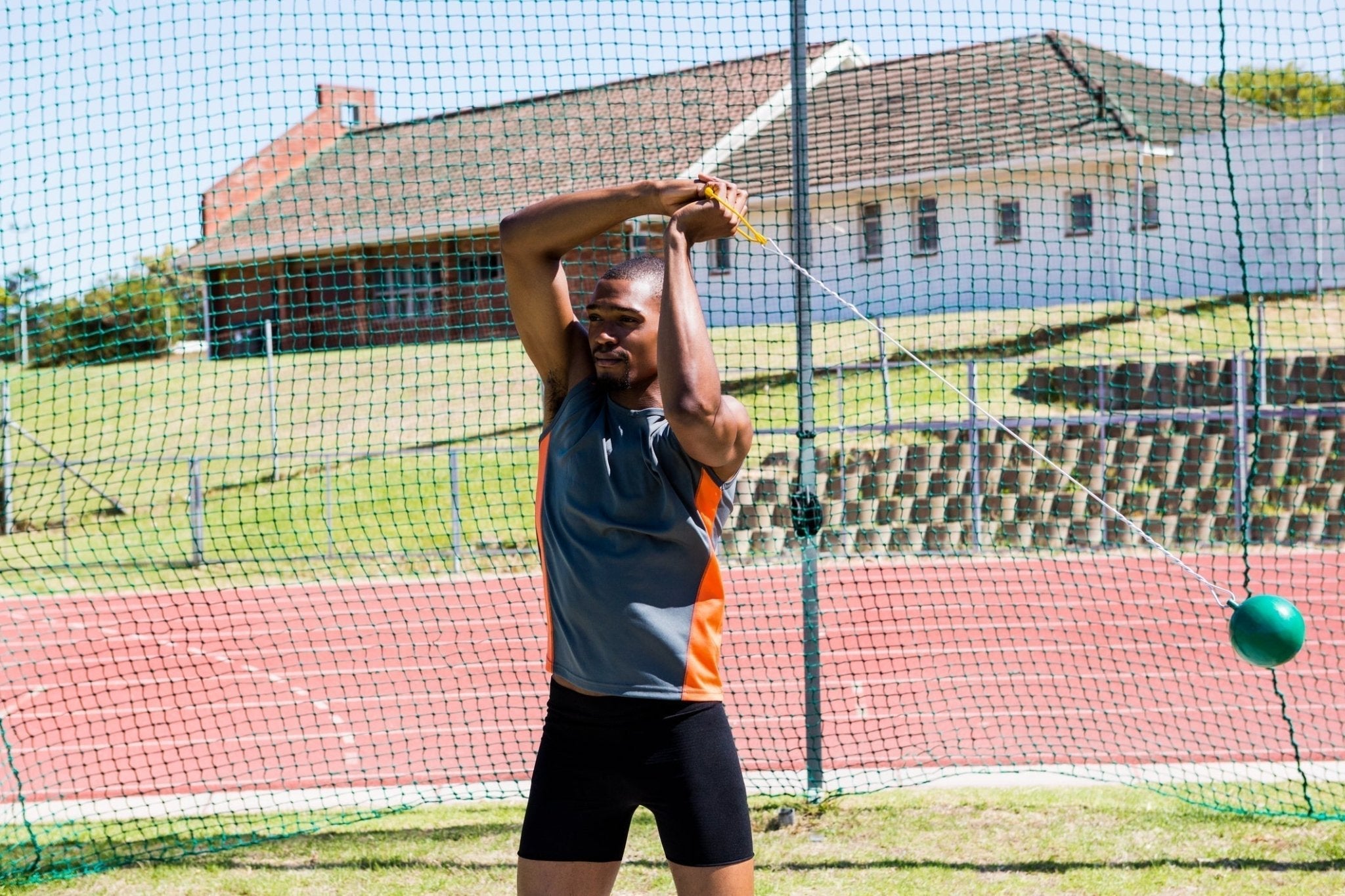
Field events involve jumping (High Jump, Pole Vault, Long Jump, Triple Jump) and throwing (Shot Put, Discus, Javelin, Hammer Throw). These events are all about explosive power. For example, the Fosbury Flop in the high jump looks like a person falling awkwardly onto a bed, but it is actually a genius application of physics to lower the athlete's centre of mass, revolutionizing the event after Dick Fosbury popularized it in the 1968 Olympics. Athletes in the pole vault, like Mondo Duplantis, demonstrate incredible aerial acrobatics, clearing heights over 6.20 meters [Team USA Athletics].
"The decathlon is the ultimate test of a human being. You have to be a sprinter, a jumper, a thrower, and a distance runner all in 48 hours. It's like trying to be a world-class pianist and a heavyweight boxer at the same time." - Dan O'Brien, Olympic Decathlon Gold Medalist
Sources: Team USA Athletics, World Athletics Disciplines

How Do the Events Compare Side by Side?
Understanding track and field sports requires knowing which body type and skill set fits each event. One would not expect a 150kg shot putter to win the pole vault, just as one would not expect a marathoner to win a 60m dash. Every event has a specific physiological price of admission. It is all about finding where one's specific brand of athleticism fits on the oval. As sports scientists at Science of Sport highlight, the energy systems differentiate athletes significantly.
Sources: Science of Sport - Running Physiology, British Athletics - Event Guides

Why Is Track and Field a Challenging Sport?
People often ask if track is a sport that is actually difficult, or if it is just running in circles. The reality is that track is a brutal mental and physical grind. Sprinters have to manage insane levels of lactic acid in the 400m, an event often described as a 44-second car crash. Distance runners, meanwhile, must maintain a high Max VO2 for miles while playing a tactical game of chess against their competitors, a skill highlighted by Mayo Clinic's insights into exercise physiology.
There is also the unique psychology of the relay. Athletes spend all day competing as individuals, then suddenly have to trust three other people to pass a hollow metal tube (the baton) at top speed. One dropped baton in the exchange zone and the whole team is finished. It is a high-stakes transition from "me" to "we" that few other sports replicate. It is like a high-speed trust exercise where the floor is literal lava. This dynamic, as any coach will attest, demands a different type of mental fortitude and teamwork honed through countless hours of drills.
Sources: Mayo Clinic - Exercise Physiology, NHS - Running Benefits

Which Option Should You Choose?
If one is looking to get started in track and field sports, there is no need to pick one event immediately. Every body type has a home in this sport. Most beginners start as "unattached" athletes or join local clubs to try a bit of everything before specialising. What kind of athlete are you?
- The Sprinter: Choose this if one has a short fuse and loves explosive movements. Such an athlete will focus on fast-twitch muscle fibre development and power out of the blocks. Consider the electrifying 60m dash, often decided by mere hundredths of a second.
- The Enduro-King: If one can run for days and enjoys the runner's high, they should head for the 1500m or 5000m. This path is for those with deep lungs and high mental grit. The strategic play in a 1500m race, for instance, requires both speed and tactical awareness.
- The Technician: If one likes mastering complex movements (like a golf swing but more violent), the Discus or Pole Vault is suitable. These require incredible coordination and rhythmic timing. The javelin throw, for example, demands a blend of speed, strength, and precise biomechanics to achieve distances over 90 meters, a feat only the most skilled can accomplish.
To look the part while training, one may check out our specialised gear guides to give any team the professional edge on the start line.
? Frequently Asked Questions
6 questionsFinal Thoughts
Track and field is more than just a track sport; it is the foundation of almost every athletic endeavour. Whether one is interested in the raw speed of the sprints or the technical beauty of the field events, there is a place for every body type and skill set. Now that the basics are understood, the only thing left is to lace up some trainers and hit the oval. It is time to find out just how fast one really is.