
The Ultimate Guide to All Track and Field Events: From Sprints to Steeples
The modern track is where the real drama happens. Whether one is a casual fan watching the Olympics or a high school athlete looking to earn stripes, understanding the sheer variety of track and field events is the first step toward greatness. These track and field disciplines are not just about running in circles. They are a complex ecosystem of explosive power, tactical chess matches, and occasionally, people jumping over giant puddles of water for sport. Success on the oval requires more than just showing up; it demands a blend of raw grit and scientific timing.
TL;DR
- Track and field consists of four main pillars: track, field, road, and combined events.
- Technical rules, such as the 0.100-second reaction time limit and scratching in jumps, ensure fair play.
- Success requires specific physiological traits, ranging from fast-twitch muscle fibres in sprints to high aerobic capacity in marathons.
- Modern electronics and Fully Automatic Timing (FAT) have replaced manual stopwatches for precision.
# In This Article
4 sectionsQuick navigation to each section of this article:

Quick Tips
1Always check the heat sheet to find an athlete's lane and seed time.
2Wear event-specific spikes to maximise grip and power transfer on the track.
3Film one's form to identify technical fouls before they happen in competition.
Comprehensive Table of Track and Field Events

What Are the Major Track Events?
Track events are generally split by distance and the presence of obstacles. At the elite level, timing is everything. Digital sensors in the starting blocks measure reaction times to the millisecond. If an athlete moves less than 0.100 seconds after the gun, it is a false start. Science indicates the human brain cannot process the sound any faster, so athletes should not attempt to anticipate the gun.
The Sprints (100m, 200m, 400m)
The 100m dash is the ultimate test of pure speed. It is a straight-line blast where athletes hit top velocity around the 60-metre mark. The 200m and 400m add complexity with curves. Running a curve requires centripetal force, meaning athletes are fighting the urge to fly off into the stands while maintaining their stride.
Hurdles and Steeplechase
Hurdlers are essentially sprinters with an added element of agility. In the 100m (women) and 110m (men) hurdles, the barriers are high, and the rhythm is a strict three-step pattern between rails. The 3000m Steeplechase is a unique event, featuring 28 fixed barriers and 7 water jumps. Touching the barrier is permissible, but falling in the water can negatively impact one's personal record.
Middle and Long Distance
The 800m is widely considered a highly demanding race due to its sustained high intensity. Meanwhile, the 1500m (the metric mile) is a tactical event where runners often conserve energy before a final surge on the last lap. Long-distance events like the 5,000m and 10,000m are primarily about aerobic thresholds and endurance. In these races, athletes often maintain close proximity, seeking advantageous positions.
- Sprint Equipment: Starting blocks are mandatory for high-level 100m to 400m races.
- Distance Starts: Unlike sprints, distance races use a waterfall start where runners can move to the inside rail immediately.
- Disqualifications: Stepping on the inside lane line during a curve will result in disqualification.
Sources: World Athletics Rules

How Do Field Events Work?
Field events in track shift the focus from speed to explosive power. These are measured by height or distance, and the rules regarding fouls or scratches are incredibly strict. Whether one is throwing a heavy metal ball or attempting to clear a 6-foot bar, the margin for error is non-existent.
The Jumps
Horizontal jumps include the Long Jump and Triple Jump. In both, if even the tip of an athlete's shoe crosses the edge of the take-off board, it is a scratch. No mark is recorded. The Triple Jump is particularly technical, requiring a hop, step, and jump sequence. Vertical jumps (High Jump and Pole Vault) allow three attempts per height. Dislodging the bar results in a miss.
The Throws
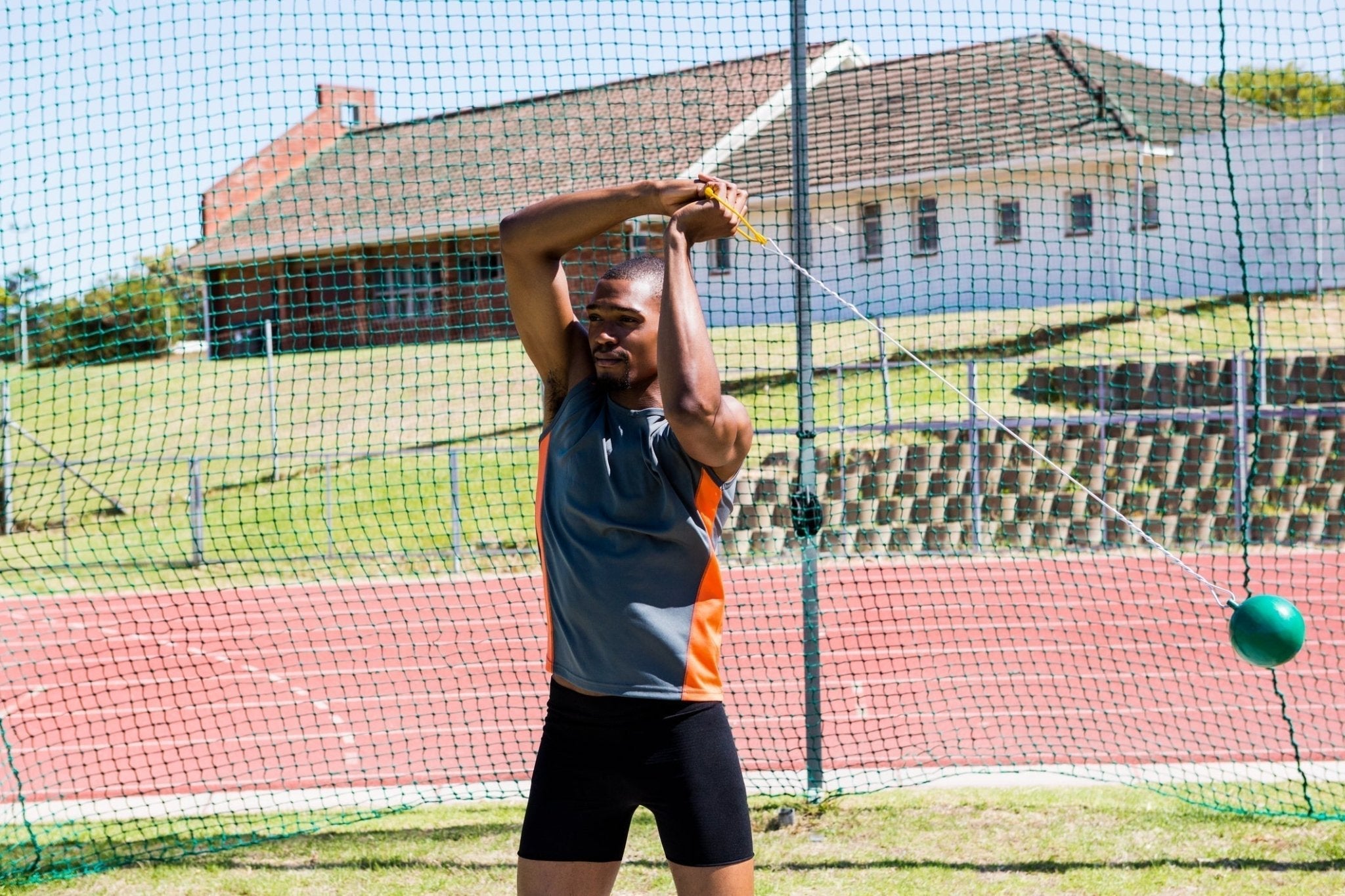
Throwers use specialised implements: the shot (balanced on the neck), the discus (a weighted plate), the hammer (a ball on a wire), and the javelin (a literal spear). Athletes must stay within a concrete circle until the implement lands. Stepping out of the circle before the official indicates is an automatic foul.
"The pole vault is essentially a physics experiment where the athlete is the most volatile variable." - Sergey Bubka, Legendary Pole Vaulter
Sources: USA Track & Field

How Do They Compare Side by Side?
Comparing these events is like comparing a drag race to a marathon in the desert. Some require one to be a human cannonball, while others require the patience of a saint. Finding one's niche means matching one's body type to the specific demands of the discipline before competing.
Sources: NCAA Track and Field Records

What Are Combined and Road Events?
Combined events are the ultimate test of the all-rounder. These athletes are the Swiss Army knives of the sporting world, transitioning from hurdles to throwing heavy objects. They are gladiators who do not have the luxury of specialising in just one movement.
The Multi-Event Circus
- Decathlon (Men): Ten events over two days including the 100m, Long Jump, Shot Put, and the demanding 1500m finisher.
- Heptathlon (Women): Seven events ranging from the 100m Hurdles to the 800m.
- Indoor Pentathlon: Five events completed in a single day, usually involving hurdles and jumps.
Road Disciplines
The Marathon (42.195 km) is a premier road event. It differs from track events due to varying terrain and weather. Race Walking is another distinct discipline. It has two strict rules: one foot must always be in contact with the ground, and the supporting leg must be straight. Judges observe closely, and three red cards result in disqualification.
Sources: World Athletics Combined Events

How Do Performance Tiers Compare?
Understanding track and field events is easier when one knows what a good result looks like. It is important to remember that most people's performances differ significantly from elite athletes.
- Varsity Level: Competitive at the local high school level. A sub-11.5 second 100m for boys is a solid benchmark.
- Elite Collegiate: These are marks that qualify for NCAA championships, such as a 15-metre Triple Jump or a sub-4:00 minute mile.
- Olympic Standard: The qualifying marks set by World Athletics that an athlete must achieve to be considered for the Olympic Games.
Sources: Olympic Marathon Standards

Which Event Should You Choose?
Picking from the many events in track and field depends on one's physical archetype. At Track Barn, we believe in providing the best gear for every athlete. If one has explosive fast-twitch fibres, the 100m or Long Jump may be suitable. If one has the endurance of a sled dog and a high pain tolerance, the 800m or 5,000m could be a good fit. To find the right gear for your specialty, you can browse collections/all on our site. It is advisable to select an event that aligns with one's natural abilities and coordinative skills. To begin your journey, get-started with a custom team shop today.