
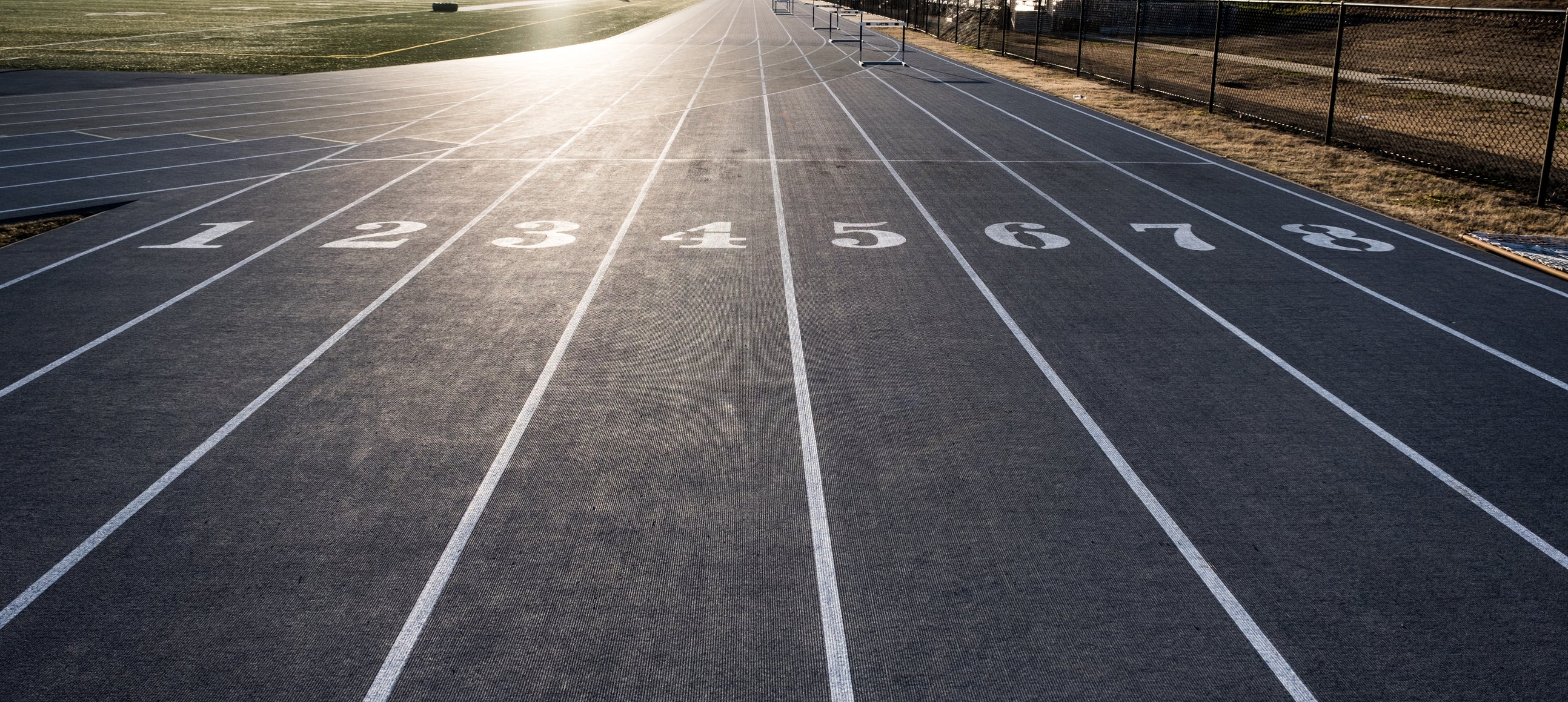
A standard outdoor track and field track is 400 meters long. This internationally recognized distance provides consistent competition. It features two straight segments and two curved sections.

💡 Stuck on a team name? Try our free Team Name Generator →

TL;DR

A typical outdoor track and field track is precisely 400 meters around the inside lane, although indoor tracks are usually 200 meters. These tracks are engineered with specific lane widths and turn radii to ensure fair competition and accurate distance measurements for events ranging from sprints to long-distance races, with surface materials designed for optimal athlete performance and safety.

Track Type Total Length (Inner Lane) Lane Width Primary Use
Outdoor Standard 400 meters (1,312 ft 4 in) 1.22 meters Olympics, Championships
Indoor Standard 200 meters (656 ft 2 in) 0.90-1.10 meters Winter Competitions
Metric Football 400 meters (1,312 ft 4 in) Varies Training, Local Meets
Imperial (rare) 440 yards (402.34 meters) 1.22 meters Historical Events

What Are the Standard Dimensions of a Track?

The standard dimensions for an outdoor track are 400 meters in total length around the inner lane, featuring specific straightaway and bend measurements. These precisely engineered dimensions are critical for maintaining competitive fairness and accurately recording athletic performances across various events. Many international and scholastic competitions adhere to these precise lengths.

  • The inside lane of a standard track measures exactly 400 meters.
  • Each lane is typically 1.22 meters (4 feet) wide.
  • Straight sections of the track are often around 84.39 meters long.

Why Are Track Dimensions Standardised?

Track dimensions are standardised to ensure fair competition and allow for consistent record-keeping of athletic achievements globally. Uniform measurements mean that a performance on one certified track can be directly compared to a performance on any other, creating a level playing field for athletes worldwide. This global standardisation supports the integrity of records and rankings.

  • Standardisation allows for direct comparison of athlete performances across different venues.
  • Regulations by bodies like World Athletics dictate precise measurements for all official tracks.
  • Consistent dimensions ensure that pacing and strategy remain transferable between competitions.

How to Choose the Right Footwear for Track Events?

Selecting appropriate footwear for track events involves considering event type, track surface, and specific shoe features like spike length. Athletes should evaluate their primary event, whether it is sprinting, middle-distance, or long-distance, to determine the ideal spike plate stiffness and sole cushioning. Proper fit is crucial for performance and preventing injuries.

  • Identify your specific event, as sprint spikes differ from distance spikes.
  • Consider the track surface; outdoor tracks permit longer spikes than indoor tracks.
  • Ensure a snug fit, often requiring a half-size reduction from regular shoes to maximise responsiveness.
💨 DOMINATE THE TRACK IN STYLE!
Elevate your team's performance and presence with standout custom track uniforms from TrackBarn. Make a statement from the starting line to the finish.
DESIGN YOUR TEAM'S UNIFORMS →
Premium Materials · Team Branding · Player Comfort

Our Expert

Nic Reese
NR

Nic Reese

Our Sport Expert

Nic Reese is a sports expert and lifelong enthusiast with a deep focus on bowling and competitive team sports. He brings practical insight, real-world experience, and a genuine passion for the game into every piece of content. Nick is driven by a love of sports culture, performance, and helping players and teams perform at their best.

Track and field

Leave a comment

Related FAQs

View all

How to clean white track spikes?

track and fieldTrackBarn

To clean white track spikes, first remove the laces and insoles, then scrub visible dirt with a soft brush and a mild soap-and-water solution, avoiding harsh chemicals. For stubborn stains, a diluted bleach solution (1:10 ratio) can be applied carefully.

Which one is not a track and field event?

track and fieldTrackBarn

Cross-country running is not a track and field event because it takes place on natural terrain like dirt and grass, rather than on a synthetic track surface with defined lanes.

What are the best track spikes for hurdles?

track and fieldTrackBarn

The best track spikes for hurdles feature a stiff spike plate, a low-profile design for stability, and multiple short pyramid pins between 0.25 and 0.375 inches for optimal grip without impeding stride mechanics. This allows for quick, powerful transitions over barriers.

What does nm mean in track and field?

track and fieldTrackBarn

In track and field, "NM" signifies "No Mark," indicating an athlete did not record a valid measurement in a field event.

What is pole vault in track and field?

track and fieldTrackBarn

Pole vault is a track and field event where athletes use a long, flexible pole to clear a horizontal bar placed at significant heights. Competitors are scored on the maximum height achieved, following a precise sequence of events for a valid attempt.

What is ea javelin anticheat?

track and fieldTrackBarn

EA Javelin Anti-Cheat refers to specific regulations governing the javelin event, particularly the mandated use of rubber-tipped javelins across eight US states for high school competitions due to significant safety concerns. This measure aims to minimize serious injuries.