
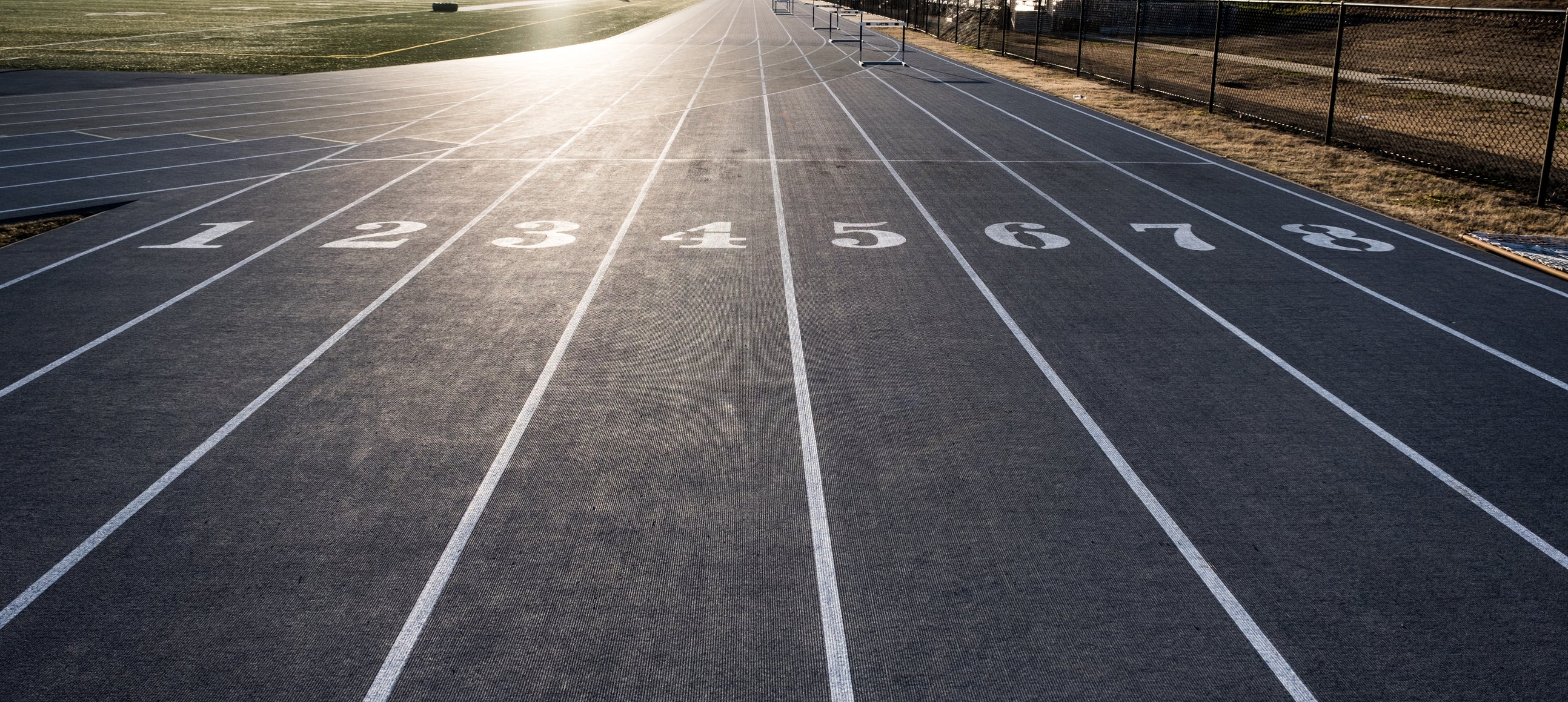
Track and cross country are distinct sports. Track events occur on an oval, featuring sprints and middle-distance races. Cross country involves longer-distance running over varied natural terrains.
💡 Stuck on a team name? Try our free Team Name Generator →
TL;DR
Track and cross country are generally considered separate sports due to fundamental differences in environment, race distances, and required skills, despite both involving running. Track focuses on speed, specific distances, and technical events on a synthetic surface, whereas cross country prioritises endurance and strategic navigation over varied, often challenging, natural landscapes.
Cross country races measure 3-10 kilometres, using a low-point team scoring method, while track events range from short sprints to longer distances, with individual and relay scoring.
What is the Primary Difference in Running Surface?
The primary difference in running surface lies in track's use of a synthetic 400-meter oval versus cross country's varied natural terrain. Track runners compete on a meticulously engineered, flat surface designed for speed and consistency, whereas cross country athletes navigate courses featuring dirt, grass, gravel, and mud.
- Track surfaces are typically made of polyurethane and asphalt, designed for consistent footing.
- Cross country courses offer unpredictable conditions, from hard-packed earth to soft, uneven ground.
- Specialised footwear, like track spikes with short pins, differs significantly from cross country spikes with longer treads for grip on natural ground.
How Do Distances and Equipment Compare?
Distances vary significantly, with track events spanning from 100 meters to 10,000 meters, while cross country races typically range from 3 to 10 kilometres. Equipment reflects these differences, with track spikes optimised for synthetic surfaces and cross country spikes designed for traction on natural terrain.
- Max stack height for track events under 800m is 20mm; for events 800m and longer, it is 25mm.
- Cross country running often requires more robust footwear to handle varied surfaces and longer distances.
- High school cross country courses are standardised at 5 kilometres for boys and girls.
How to Choose the Right Discipline for You
To choose between track and cross country, consider your preference for running environment and physical demands.
- Evaluate your natural affinity for speed and structured competition versus endurance and varied terrain.
- Reflect on whether you prefer consistent track surfaces or unpredictable natural courses.
- Consider if you enjoy individual event specialisation or a team-focused, strategic long-distance challenge.
- Assess your training capacity for the unique physical requirements of each sport.
