Demystifying Triple Jump: Technique, Records, and High School Performance
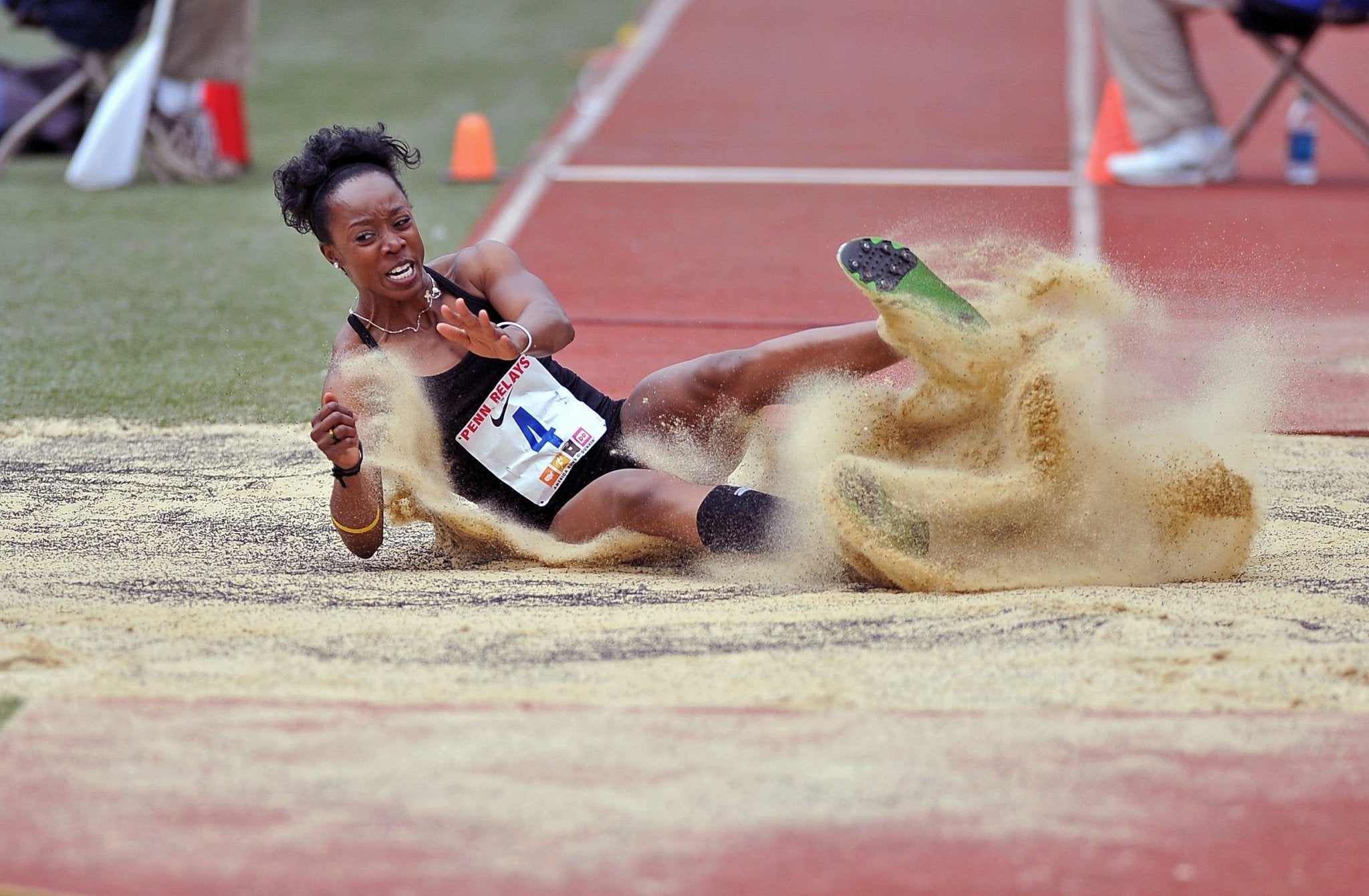
The triple jump is a track and field event. Athletes execute a hop, step, and jump into a sand pit. It demands high-level athleticism and precise body mechanics.
This data was compiled from World Athletics records and NCAA rulebooks. The physical forces in triple jump are no joke. Elite athletes hit the ground with 15 to 22 times their body weight.
That is a brutal pounding for your joints, way more than a standard long jump. High school jumpers have different goals.

TL;DR
The triple jump takes serious athletic power. Athletes jump off a board, land, and execute two more phases. Each phase puts enormous stress on the body.
# In This Article
4 sectionsQuick navigation to each section of this article:
Quick Tips
- Focus on the Step Phase: It accounts for 70% of variance in distance; optimize its execution.
- Master Body Angles: Specific body angles in each phase are crucial for maximizing distance.
- Velocity-Based Training: Adapt training to individual speed profiles for better performance.
- Plyometrics are Key: Build eccentric strength to handle impressive impact forces.
- Individualized Phase Ratios: Don't force a generic ratio; find what works for each athlete.
How do hop, step, jump phases maximize distance?
The hop, step, and jump phases convert horizontal speed into maximum distance. Each phase absorbs and redirects kinetic energy. Improper execution in any part degrades overall performance.
The Critical Role of the Step Phase
The step phase is the absolute game changer in triple jump. It accounts for approximately 70% of the variance in total triple jump distance. This makes the step phase the primary differentiator between elite and developmental athletes.
The step requires immense strength and precision.

Athletes land from the hop with forces exceeding 15 times their body weight. They must immediately execute an explosive takeoff from the same foot.
Optimizing Phase Ratios for Peak Performance
There is no "one-size-fits-all" perfect phase ratio for the triple jump. Computer simulations demonstrate that the optimal phase ratio is specific to each athlete. Trying to force a jumper into a generic model like a balanced 33% distribution can actually hurt their distance.
Athletes fall into three categories. Hop-dominated jumpers excel with a hop phase at least 5% greater than other phases. Jump-dominated athletes save energy for a final powerful jump.
- The hop phase starts from the takeoff board.
- The step phase transitions from the hop foot to the opposite foot.
- The jump phase is the final push into the sand pit.
Essential Body Angles for 80% Maximum Distance
Achieving 80% of maximum possible distance in the triple jump heavily relies on precise body angles throughout each phase, particularly in the critical step phase. While exact angles vary slightly between athletes, general biometric models and elite performance analysis indicate key ranges that optimize force application and minimize energy loss.
For instance, in the hop phase, the takeoff angle of the center of mass (COM) should ideally be between 18-22 degrees relative to the horizontal, with the athlete maintaining a relatively upright torso to preserve horizontal velocity. A common error is a too-steep takeoff, converting too much horizontal speed into vertical height, which then compromises the subsequent phases.
The step phase is where specific body angles become even more crucial for maintaining momentum and preparing for the final jump. Upon landing from the hop into the step, the ankle angle at touchdown should be approximately 90-100 degrees, allowing for a rapid and powerful ground contact.
The knee angle should be around 140-160 degrees, facilitating a strong eccentric absorption followed by a dynamic concentric push-off. The torso should remain relatively vertical (within 5-10 degrees of perpendicular to the ground) to ensure that forces are directed efficiently down and back, propelling the athlete forward.
 An over-lean forward or backward can disrupt balance and reduce the effectiveness of the ground contact.
Finally, during the step takeoff, the knee extension should be almost complete (170-175 degrees), and the COM takeoff angle should be slightly lower than the hop, typically 15-20 degrees, to prioritize continued horizontal travel into the jump phase.
The objective is to harness the momentum built in the hop to drive through the step with minimal energy dissipation.
By diligently practicing these body angles, athletes can significantly improve their efficiency, ensuring that a greater percentage of their initial approach velocity is converted into a substantial distance, aiming for that 80% (or more) of their maximum potential.
Triple Jump Spike Comparison for Explosiveness
The choice of triple jump spikes can significantly influence an athlete's performance, especially in the critical first phase (the hop).
Spike plate rigidity, often measured in "flex units" (though this is more a qualitative measure specific to manufacturers or an internal metric for research, it refers to the stiffness of the spike plate), and overall shoe weight directly impact how efficiently an athlete can transfer ground reaction forces into horizontal velocity.
A stiffer plate can offer a more responsive and "bouncy" feel, translating to better energy return, while a lighter shoe reduces the metabolic cost of carrying weight, allowing for higher leg speed.
When evaluating spikes for the triple jump, consider models optimized for multi-phase impacts and energy transfer. For instance, the Nike Triple Jump Elite 2 is known for its stiff, full-length PEBAX plate, offering excellent responsiveness for the initial takeoff and subsequent phases.
Its reported weight is around 250-280 grams (size 9 men's), making it moderately lightweight. While proprietary "flex unit" data isn't publicly available for direct comparison, its perceived rigidity is high, aiding explosive propulsion.
 Another strong contender is the Adidas Adizero Triple Jump/Long Jump. This spike often features a carbon plate in the forefoot, providing a balance of stiffness and a slightly more forgiving feel compared to some ultra-rigid options. It typically weighs in the range of 230-260 grams, offering a lighter profile.
For athletes prioritizing maximum spring in the hop, a spike like the Puma evoSPEED Triple Jump might be considered. While specific flex unit data isn't standardized across brands, Puma often incorporates aggressive carbon-fiber plates designed for maximal energy return, with weights typically competitive, around 240-270 grams.
Conversely, for a developing athlete or someone who prefers a slightly less aggressive, more flexible platform, a spike like the Brooks Wire v6 (often used for both sprints and jumps, offering versatility) might provide enough rigidity without being overly demanding, usually weighing closer to 180-220 grams due to a less extensive plate.
 The key is to find a balance where the spike's rigidity supports the athlete's explosive power without hindering their natural foot mechanics or causing discomfort, especially during repeated impacts in training.
The enhanced stiffness of modern plates allows for a quicker ground contact time and minimizes energy dissipation, contributing directly to a more powerful and efficient first phase.
What are the men's and women's triple jump world records?
The men's triple jump world record is 18.29 meters, set by Jonathan Edwards in 1995. The women's triple jump world record is 15.74 meters, set by Yulimar Rojas in 2022. This data was compiled from the World Athletics Records Database.
Men's Triple Jump World Record
Jonathan Edwards set the men's triple jump world record with a massive 18. 29 meters at the World Championships in Gothenburg, Sweden, on August 7, 1995. This gargantuan leap broke his own world record from earlier that same day.

Edwards achieved this feat with an approach velocity above 10.0 m/s, demonstrating explosive power across all three phases. No male athlete has come closer than a foot to this mark in nearly three decades, highlighting the sheer dominance of his performance.
Women's Triple Jump World Record
Yulimar Rojas holds the women's outdoor and indoor triple jump world records. Her outdoor mark of 15. 74 meters was set at the World Athletics Championships in Oregon, USA, on July 18, 2022, securing her a third consecutive world title. Before you select your own, you might want to consider reviewing available track and field jerseys.
Before that, Rojas leaped an incredible 15. 74 meters indoors at the World Athletics Indoor Championships in Belgrade, Serbia, on March 20, 2022. She consistently generates approach velocities above 9.
0 m/s, converting that speed into immense horizontal distance.
- Jonathan Edwards' record has stood for over 28 years.
- Yulimar Rojas also holds the indoor world record.
- These records represent the pinnacle of triple jump performance.
How can high schoolers increase triple jump distance?
High schoolers increase triple jump distance by first mastering velocity-based training and focusing on the crucial step phase. They must also optimize their individual phase ratios. This strategy pushes high school male athletes beyond the 12.8 meter average.
Optimizing Approach Speed and Phase Ratios
Increasing triple jump distance for high school athletes means nailing the approach speed and then perfecting what happens next. Male athletes typically range between 9. 7 and 10. 1 meters per second on the runway, female athletes between 8. 8 and 9.

eters per second. The force generated at landing can hit 15 times body weight. You need to convert all that linear speed into upward and forward momentum.
Enhancing Force Absorption and Reactive Strength
The brutal truth is you need legs of steel to manage the triple jump's impact. The landing leg can absorb up to 15 times body weight. This is a massive hit.
A long jump takeoff is only 2.5 times body weight by comparison.
- Integrate plyometrics twice weekly for explosive power gains.
- Customize training programs to target specific biomechanical weaknesses.
- Prioritize eccentric strength development for knee stability and power.
Neglecting the Hop Phase
Neglecting the hop phase causes athletes to lose critical horizontal velocity. This directly impacts overall triple jump distance. It forces jumpers to compensate later, often leading to fouls.
Common Hop Phase Errors
Athletes frequently make fundamental errors in the hop, reducing potential distance. These patterns include insufficient knee drive and poor body lean. Without proper coaching and biomechanical analysis, these errors persist.
High school athletes, in particular, struggle with these foundational mechanics.

Mitigating Hop Phase Deficiencies
Addressing hop phase deficiencies requires targeted training. The goal is to optimize the conversion of approach speed. This prevents early energy loss.
Implementing specific drills improves hop phase mechanics. High school programs can integrate plyometric exercises. These build eccentric strength.
This is crucial for managing the immense landing forces. Forces can reach 15 times an athlete's body weight during the landing of each phase.
- Athletes often misinterpret the hop as a simple entry step.
- Proper hop execution sets up the entire sequence effectively.
- A weak hop compromises the more important step phase.
? Frequently Asked Questions
5 questionsFinal thoughts
Mastering the triple jump demands precision, power, and detailed technical execution across all phases. High school athletes must balance speed with biomechanical efficiency to avoid fouls and maximize distance. It is not just about raw power.
Understanding the specific technique, particularly the often-overlooked step phase which accounts for 40% of performance variance, is critical. 89 meters. Implementing a targeted, progressive training regimen, such as a 6-week plyometric program, can elevate performance. This approach helps reduce the 30-50% foul rates seen at championship levels.
To maximize performance and reduce injury risks, athletes and coaches should focus on science-backed training methods and equipment. This includes using appropriate track and field bags and backpacks and confirming proper attire with a size chart, or even exploring options for custom team apparel at Team Big League Shirts.
References
- (PDF) Velocity-Based vs. Percentage-Based Training: Superior Effects on Acceleration and Explosive Power in High School
- The effect of increasing strength and approach velocity on triple jump performance | Request PDF
- PMC4096103 (Three-Dimensional Biomechanical Analysis of the Triple Jump Phases):
- Optimisation of phase ratio in the triple jump using computer simulation
- (PDF) Optimum takeoff angles for triple jump
- PMC12285116 (Neuromuscular and Mechanical Adaptations in Elite Jump Athletes):
- Can We Quantify the Benefits of “Super Spikes” in Track Running?